
Menopause is not an illness, and it is not an ending. It is a transition every woman who lives long enough will make, usually between the ages of 45 and 55. Following World Menopause Day on 18 October, we explore how Chinese medicine has understood this change for two thousand years, and how that wisdom can sit alongside good modern care.
Part oneThree stages, one transition
Many women are surprised to learn that symptoms often begin years before their periods stop. Understanding the stages helps make sense of what is happening and when to seek support.
Perimenopause
Hormone levels fluctuate and periods become irregular. Hot flushes, poor sleep, anxiety and brain fog can start here.
Menopause
The point at which periods have stopped for 12 months in a row, as hormone levels fall.
Postmenopause
Many symptoms ease, while protecting bones, heart and pelvic health becomes more important.
Part twoThe classical view: the decline of Tian Gui
The very first chapter of the Huang Di Nei Jing describes a woman’s life in cycles of seven years. At fourteen, Tian Gui, the essence that governs fertility, arrives and menstruation begins. At forty-nine, Tian Gui is exhausted, the Ren and Chong vessels decline and menstruation ends.
天癸竭,地道不通
“At seven times seven, the Ren vessel is empty and the great Chong vessel declines. Tian Gui is exhausted and the pathway of the Earth no longer flows.”
Huang Di Nei Jing · Su Wen, Chapter 1In Chinese medicine this is a natural shift centred on the Kidney, the root of yin and yang in the body. When the shift happens smoothly, a woman passes through it with few complaints. When Kidney yin or yang is already depleted by years of overwork, stress, childbirth or poor sleep, the imbalance shows itself as symptoms.
Part threeCommon patterns and how they show up
No two women experience menopause in the same way, which is why Chinese medicine treats the pattern rather than the label. These are the patterns practitioners see most often, along with formulas commonly studied for each.
| What she notices | Chinese medicine pattern | Formulas often studied |
|---|---|---|
| Hot flushes, night sweats, dry skin, a hot feeling in the palms and soles | Kidney yin deficiency with heat rising | Zhi Bai Di Huang Wan, Liu Wei Di Huang Wan |
| Feeling cold, low energy, aching lower back, frequent urination | Kidney yang deficiency | You Gui Wan, Jin Gui Shen Qi Wan |
| Hot flushes and cold feet at the same time, tiredness, low mood | Kidney yin and yang both deficient | Er Xian Tang |
| Waking at night, palpitations, anxiety, a restless mind | Heart and Kidney not communicating | Tian Wang Bu Xin Dan |
| Irritability, mood swings, breast tenderness, sighing, flushes with stress | Liver qi constraint with heat | Jia Wei Xiao Yao San |
| Tearfulness, sudden sadness, restlessness | Restless organ (zang zao) | Gan Mai Da Zao Tang |
Patterns often overlap, and a qualified practitioner will adapt any formula to the individual after a full consultation. Herbal medicine should never be chosen from a table.
Part fourWhat the evidence says
Honest about the research
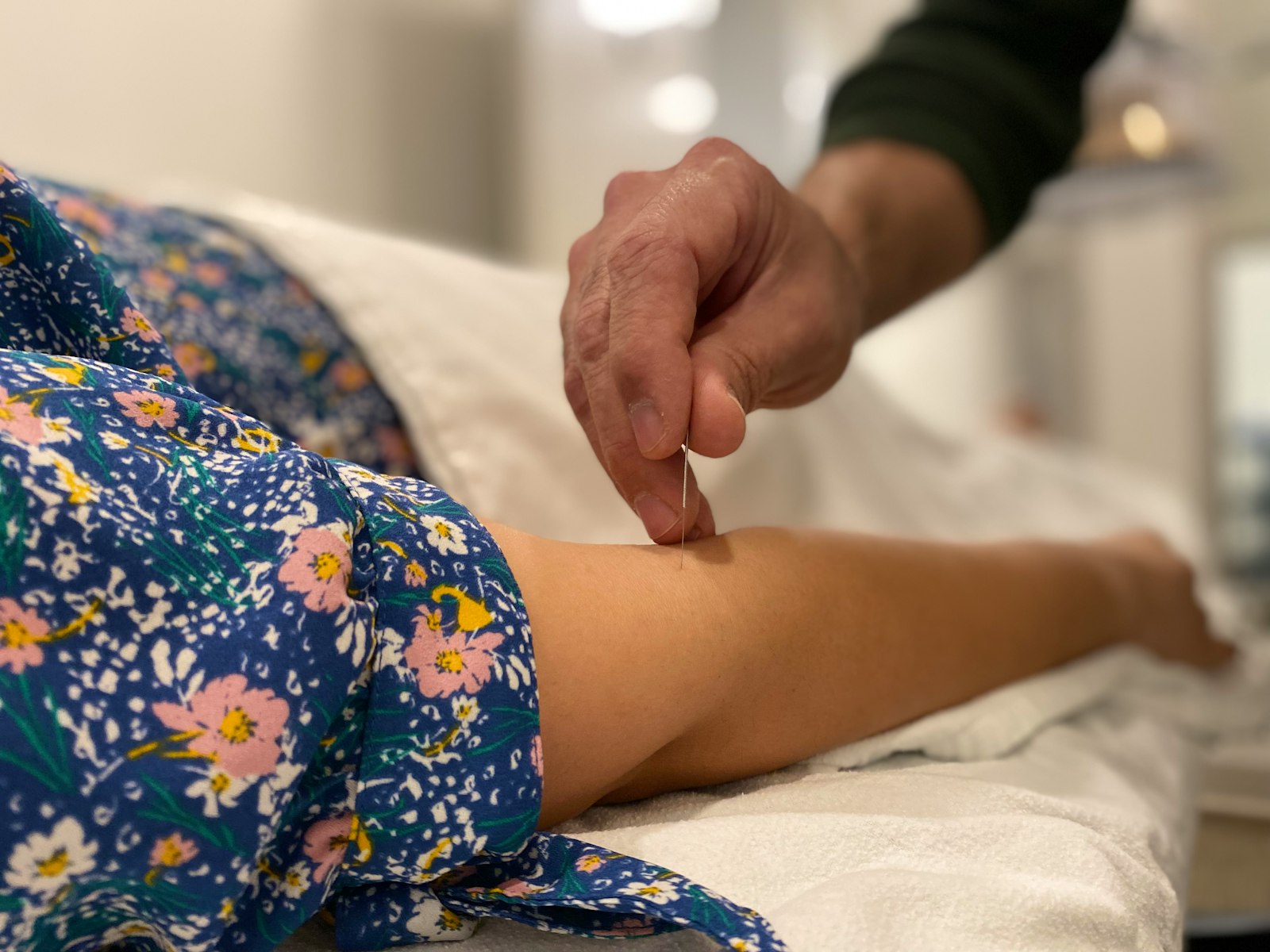
A Cochrane review of acupuncture for hot flushes found that acupuncture appeared to help compared with no treatment, but showed no clear difference from sham acupuncture and was less effective than hormone therapy. The reviewers described the evidence as low quality and too limited to draw firm conclusions.
In the UK, NICE guidance updated in November 2024 recommends HRT as the main treatment for menopause symptoms, and menopause-specific CBT for hot flushes, night sweats, low mood and sleep problems, either alongside HRT or for women who cannot or prefer not to take it. Chinese medicine is best seen as a complementary approach that works alongside this care, not instead of it.
Part fiveEveryday ways to nourish yin
Much of the advice in Chinese medicine for this stage of life is about conserving yin and calming the Heart. Many of these habits also match what modern menopause guidance recommends.
- Protect your sleepGo to bed before 11pm where you can. In Chinese medicine, yin is restored during the night.
- Cool the fire gentlyCut back on alcohol, coffee and very spicy food, which many women find trigger hot flushes.
- Eat to nourishBlack sesame, goji berries, mung beans, pears and leafy greens are traditional yin-nourishing foods.
- Move without exhaustingWalking, swimming, tai chi and qigong move qi and support bone and heart health.
- Make room to restSlow breathing, meditation or a quiet cup of tea each day helps settle the shen.
- Talk about itSpeak to your GP, your practitioner and the people close to you. Support makes the transition easier.
Traditional formulas, made accessible
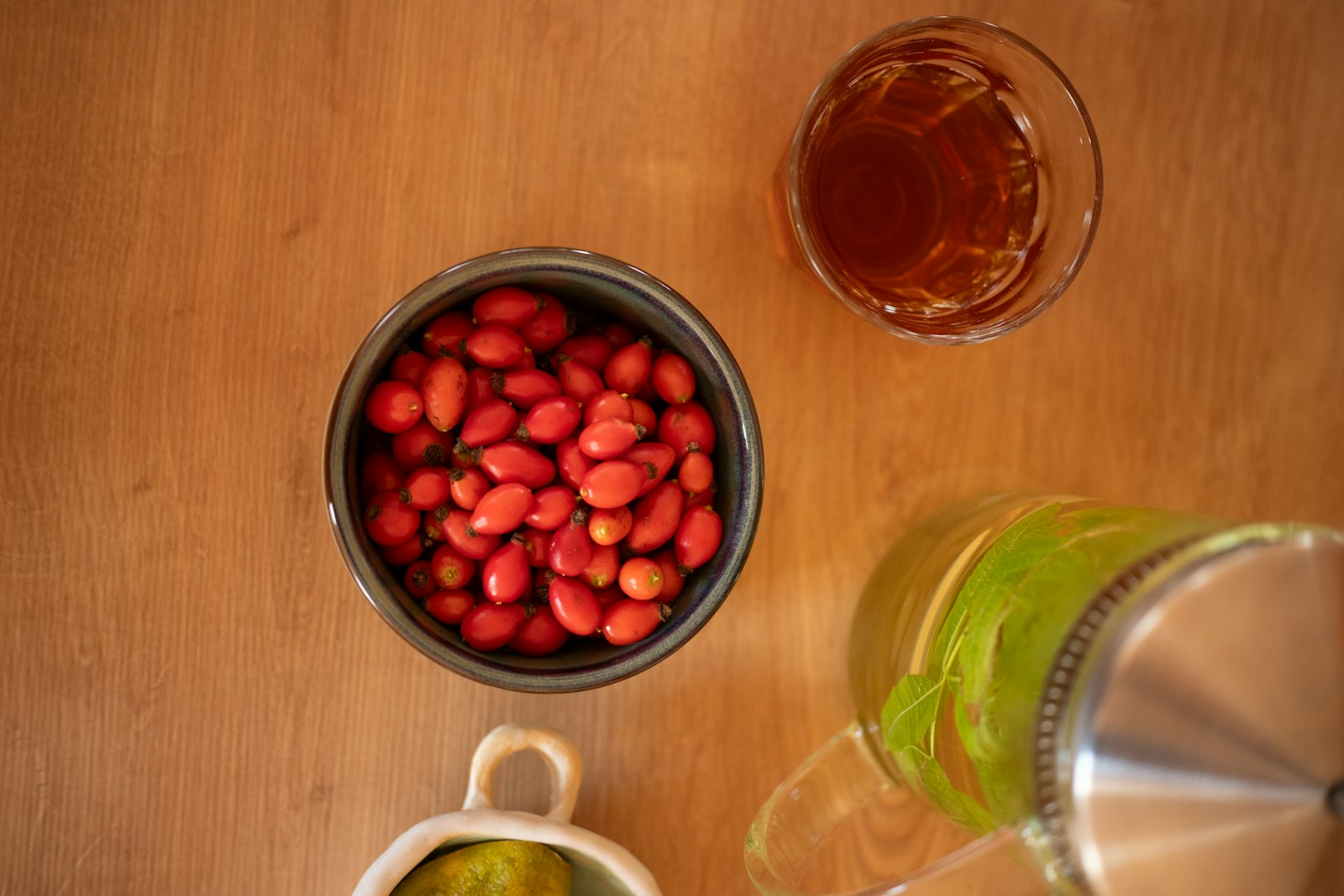
Many women ask us how they can explore classical formulas between treatments. Our sister company, Aura Nutrition, part of the same Phoenix group as the Academy, offers traditional formulas such as Jia Wei Xiao Yao San and Xiao Yao San as concentrated food supplements, alongside a range of functional herbal teas.
Aura also publishes a helpful guide to the early signs of menopause, written for women who are just starting to notice changes.
Why practitioners choose Aura
- Herbs grown using the traditional Daodi principle
- GMP certified, vegan and gluten-free
- Used by practitioners to support patients between acupuncture treatments
- Speak to your GP or practitioner first if you take HRT or any other medicine
For practitionersClinical notes and red flags
Menopause is one of the most common reasons women seek acupuncture and herbal medicine, and it is taught in depth in the gynaecology module of our Diploma. Good care starts with knowing when Chinese medicine is not the first answer.
Refer to the GP without delay if a patient has
- Any bleeding after periods have stopped for 12 months
- Very heavy, prolonged or irregular bleeding in perimenopause
- Symptoms of menopause before the age of 45
- A new breast lump, unexplained weight loss or severe pelvic pain
- Low mood with thoughts of self-harm
Always take a full medication history. Ask about HRT, tamoxifen and other hormone-related medicines, and be especially cautious with herbs for patients who have a history of hormone-sensitive cancer. Never advise a patient to change or stop prescribed treatment.
Frequently asked questions
How does Chinese medicine explain menopause?
Chinese medicine sees menopause as a natural decline of Tian Gui, the essence that governs fertility, around the age of 49. Symptoms appear when the Kidney yin or yang is depleted, or when the Liver and Heart are also out of balance.
Can acupuncture help with hot flushes?
A Cochrane review found acupuncture appeared to help compared with no treatment, but showed no clear difference from sham acupuncture and was less effective than HRT. The evidence is low quality, so acupuncture is best used as a complementary therapy alongside conventional care.
Which Chinese herbal formulas are used for menopause?
Commonly studied formulas include Zhi Bai Di Huang Wan, Er Xian Tang, Tian Wang Bu Xin Dan, Jia Wei Xiao Yao San and Gan Mai Da Zao Tang. Each suits a different pattern, so they should be prescribed by a qualified practitioner after a full consultation.
Can I take Chinese herbs with HRT?
Some herbs may interact with HRT and other medicines. Speak to your GP and a qualified herbal practitioner before combining them, and never stop or change prescribed treatment without medical advice.
When should I see a doctor about menopause symptoms?
See your GP if symptoms affect your daily life, if they start before the age of 45, or straight away if you have any bleeding after your periods have stopped for a year.
Support women through every stage of life
Learn to treat gynaecological conditions, including menopause, with classical Chinese herbal medicine on our EHTPA accredited Diploma.
Explore the DiplomaCPD for practitionersSources
- NHS. Menopause and perimenopause.
- NICE (2024). Menopause: identification and management (NG23).
- Dodin S et al. (2013). Acupuncture for menopausal hot flushes. Cochrane Database of Systematic Reviews.
- Huang Di Nei Jing Su Wen, Chapter 1.
This article is for educational purposes only and is not medical advice. Always consult your GP or a qualified healthcare professional about your health.